

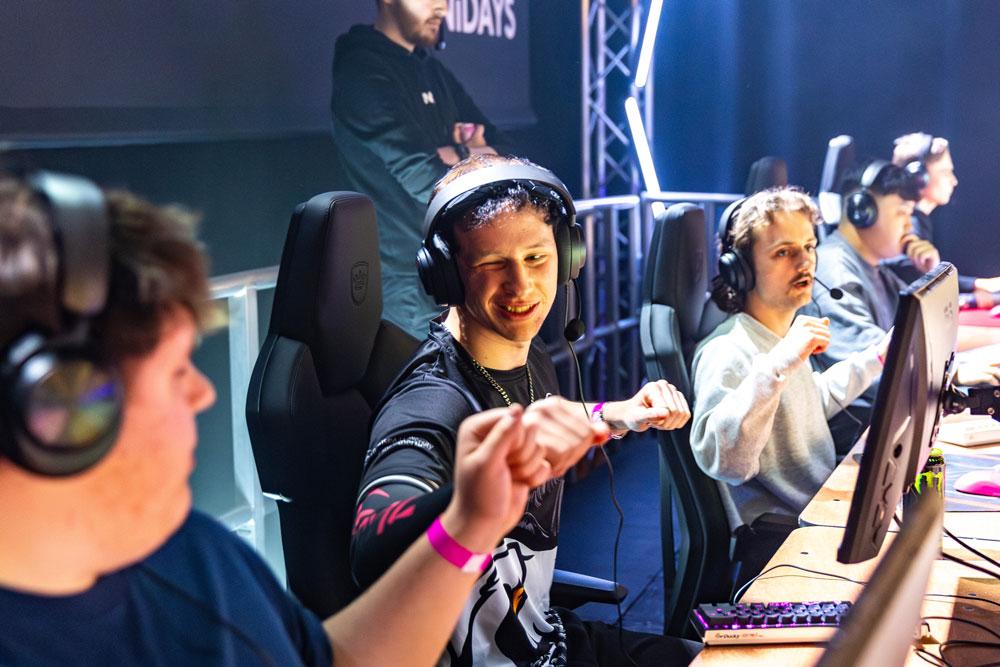
With more than 18,000 students studying the Esports BTEC qualifications, the UK video games industry driving over £7 billion in consumer spending, and the Esports World Cup featuring a record $75m prize pool, competitive gaming is more prominent than ever. The British Esports Federation runs through the opportunities and benefits for schools
What started out in bedrooms and halls full of computers has gone on to become a billion-dollar industry. Esports (or electronic sports) is the act of playing video games competitively to spectators, either online or in-person.
For years it has bubbled underground, with small amateur tournaments offering PC equipment as prizes, but now it has plenty of professional gamers making a living out of playing at the highest level, in games like League of Legends, Counter-Strike, Rocket League and more.
Beyond this, it’s really starting to hit the mainstream. The International Olympic Committee (IOC) has experimented with esports with side events, and the annual Esports World Cup in Saudi Arabia now has a prize pool of more than $75m spread across multiple games and competitions. And the broader video games industry is worth more than £7bn in the UK alone, or around £200bn globally. That makes it well over twice as large as the film and music industries – combined.
Esports are also hugely popular with young people, with around a third of 18–29-year-olds reporting high interest, according to data from YouGov’s Global fan profiles. It’s frequently ranked as the second most popular sport for young males to watch after football, surpassing traditional physical sports like rugby and tennis.
Then there are the major esports tournaments and world championships in various different game titles, with the most-skilled gamers doing battle on the biggest of stages often for prize pools stretching into the millions of pounds.
But esports isn’t just about the pro level. Like traditional sports, there are multiple tiers, including grassroots tournaments and collegiate activities, offering several opportunities and benefits to schools.
Esports skills and qualifications
Like sports, the esports industry requires professionals including commentators, marketers, broadcast producers, coaches, reporters, video creators and social media managers, to name a few. There are now a range of qualifications to give students highly transferable digital skills and the knowledge to thrive within these roles – and in industries beyond.
Today, there are some 18,000+ young people that have studied the various Esports BTECs developed by the British Esports Federation in partnership with Pearson, which include Level 1 to Level 3 variants, Higher Nationals and more. British Esports has also partnered with the Leadership Skills Foundation to deliver esports leadership qualifications for those aged 11+, allowing younger people to take their initial steps onto the esports career pathway.
These various qualifications help build digital literacy and cognitive skills, as well as decision making, dexterity, creativity, concentration, leadership and communication, strategic thinking and STEM skills. Not only that, but esports can also lead to improved student wellbeing and attendance levels, as found in British Esports’ work in Alternative Provision Schools.
Beyond this, British Esports hosts an annual Education Summit, has a large presence at the Bett Show each year and has a partnership with Sunderland College to help deliver the BTEC in Esports programme from British Esports’ very own National Esports Performance Campus in Sunderland.
Jason Frost, curriculum manager for creative arts & media at Burnley College, which competes in the Student Champs, concludes: “Esports is the fastest-growing new course in our college’s history and the Student Champs has been fantastic for us – we now have ten teams competing on a weekly basis. Every student has a job – it could be admin, commentating, competing… those skills you really need, communication, leadership, teamwork, suddenly these kids who couldn’t look you in the eye when you walked through the door are excelling in all these things.
“Whatever we’d invested in esports initially, we got back in that first year. And we’ve gone on to invest in another three rooms. We also started offering the HNC qualification in esports and have a new room in the university block. We’re going from strength to strength - we’ve gone from 20 students to about 150 students in two years.
“So I would say to SLT (senior leadership teams), you need to be thinking about this – you need to be thinking about esports.”
Student champions
The British Esports Student Champs, organised by national body the British Esports Federation, allows students aged 12+ to represent their secondary schools, further education colleges and alternative provision schools across the UK to compete with one another.
This is the largest amateur grassroots esports tournament for students, and features games including League of Legends, Rocket League, VALORANT and Overwatch 2, plus multiple tiers for students of all ages and abilities, as well as inclusive tournaments for women and marginalised genders. There’s a PUBG MOBILE tournament for smartphone and tablet gamers, too, and a Student Racing League with Williams Esports.
Participation in these team-based tournaments also allows students to develop transferable skills such as teamwork, leadership communication and problem solving, as well as future-ready digital and STEM-based skills. It also allows students to make friends, have fun and enjoy themselves doing something they love.
Almost 200 institutions compete in the Student Champs today, with more than 1,250 teams and 6,000 students taking part overall each year. An annual live grand final event takes place at the end of each season.
British Esports has also spoken about the impact of esports on neurodiverse individuals. Esports has created an inclusive environment that harnesses their strengths, such as attention to detail, strategic thinking and hyperfocus. With esports and education, it adds an element of interest to an otherwise regular qualification, allowing students to stay engaged and increase productivity.
How to get started in esports
With esports being such a community-driven activity, the ‘build it and they will come’ strategy can pay off. Why not identify a tech-savvy teacher at your school who is perhaps a gamer themselves, and encourage them to experiment with the IT equipment to get some games going on existing PCs?
Engaging with students and holding an esports club or team tryouts can foster a sense of community and competitive spirit. You don’t need super high-tech computer rigs, flashy lighting or expensive setups, either. Start simple, research what else you might need, and most of all, have fun with it.
The British Esports Federation also offers support services to provide expert advice and tailored end-to-end solutions for organisations in the education sector, from esports facility design to esports curriculum planning and development at all FE and HE key qualifications stages, to funding advice, staff and teacher CPD, training and certification, educational day trips and workshops at our Sunderland facilities, and more.
To find out more about esports and get your school involved, to contact us at britishesports.org/contact-us or set up a meeting via education@britishesports.org.