Gibb: ‘The claim the EBacc squeezes out the arts is wrong’
Writing in the Telegraph, Schools Minister Nick Gibb has criticised the culture of overturning new commitments that discourage pupils from studying core academic subjects.
Gibbs said that when discussing the GCSE policy with young people who attended top comprehensive schools, ‘they take it for granted that pupils study maths, English and science at GCSE, alongside a foreign language and either history or geography’.
He contended: “Nationwide less than one quarter of pupils were entered for such a broad academic curriculum in 2012, and less than one in five achieved a C grade in each subject.”
The Schools Minister continued to explain that the new English Baccalaureate (EBacc) was introduced to combat this issue, with the number of pupils being entered for the qualification increasing from 23 per cent to 39 per cent over three years.
He said: “Unsurprisingly, it is capable pupils from a disadvantaged background who have been less likely to be entered for the EBacc. Research by the Sutton Trust in 2014 showed that pupils eligible for free school meals who scored in the top 10 per cent nationally at the end of primary school were significantly less likely to be entered for the EBacc, compared to their wealthier peers who achieved the same level aged 11.
“No pupil’s education should be limited by the circumstances of their birth. As the Prime Minister stated in his speech on life chances earlier this month, high expectations should not be preserve of elite schools, but an entitlement for all. In time, it is our ambition that 90 per cent of pupils nationwide are entered for the EBacc.”
Gibb argued against some ‘vocal figures in the media’ who believe the EBacc represents a dreadful step backwards in the cultural life of schools. The news comes as a letter was delivered signed by 70 figures from the arts warning that creative subjects ‘would be squeezed out altogether’ by the EBacc.
Gibb declared that the belief was ‘quite simply wrong’, citing a four per cent increase in pupils being entered for at least one GCSE arts subject, between 2011-15.
He explained: “This is because pupils at English state schools enter, on average, nine GCSEs and equivalent qualifications, rising to more than 10 for more able pupils. As the EBacc covers seven GCSEs, this leaves ample room for other choices.”
Gibb added that it was important to consider that unlike other subjects, there were other opportunities to participate in the arts, such as school plays, choirs and the orchestras.
He concluded: “We are committed to overturning a culture of low expectations that for too long discouraged capable pupils, predominantly from disadvantaged backgrounds, from studying the core academic subjects that open doors to their future.”
Read moreLatest News
02/10/2025 - 09:31
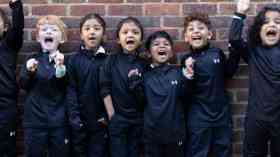
The Always Active Uniform is a flexible, comfortable school uniform including active footwear, designed to support spontaneous movement and daily activity throughout the school day.

01/10/2025 - 10:23
The Welsh Government has agreed to continue a licensing deal which will give all learners at Welsh state schools free access to Microsoft 365 at school and at home.

01/10/2025 - 09:51
Schools will play a greater role in ensuring every pupil has a clear post-16 destination, with a new approach to a guaranteed college or FE provider place available as a safety net being tested.

30/09/2025 - 09:51
The Chancellor has committed over £10 million in funding to guarantee a library for all primary schools by the end of this parliament.

30/09/2025 - 09:45
New data from Ofqual shows that schools and colleges across England are making progress in cyber security training, but are struggling to recover quickly from attacks when they occur.