
As schools respond to new enrichment expectations, Matt Healey, adventure lead at the Field Studies Council, explores how outdoor learning can help young people build resilience, confidence and the skills to thrive in an unpredictable world
School leaders are navigating a period of significant change. Enrichment, agency and equitable access are no longer peripheral concerns, they are central to national policy. The DCMS Youth Strategy sets out a ten-year ambition to improve young people’s access to nature and high-quality activities that support wellbeing, belonging and aspiration. Alongside this, the government’s response to the Curriculum & Assessment Review calls for a more coherent curriculum with stronger fieldwork, oracy, disciplinary thinking, climate education and a new national enrichment entitlement.
The scale of ambition here is significant. Schools are being asked to treat enrichment as a core entitlement rather than an optional extra, to design curricula that connect knowledge with lived experience and to help young people develop the confidence to navigate an uncertain world.
Outdoor learning and residential school trips can help schools meet these new enrichment goals and organisations working across the outdoor sector are well placed to support school leaders as they look to embed adventure and access to nature into their timetables.
At Field Studies Council, we have been delivering outdoor and environmental education to schools for more than 80 years. Our adventure-learning approach to day trips and residentials offers senior leaders a practical way to meet the government’s enrichment offer. It gives schools a shared language for challenge, resilience, cross-curricular learning and personal development. Rather than removing uncertainty for young people, our goal is to encourage them to embrace and conquer it. By challenging young people to try new activities in different environments and landscapes, our tutors aim to make the unfamiliar inhabitable through structure, guidance and reflection. We call this process ‘Domesticating Monstrosities’ and our approach to it is best defined as ‘Teaching with Monsters’.
For school leaders, this approach can be a strategic lever to strengthen curriculum intent, support implementation, enhance personal development and build a whole-school culture where challenge is not feared but understood, navigated and valued.
What the “monster” really represents
Every teacher knows the moment when a pupil pauses and says quietly: “I’m not sure I can do this.” That moment – where risk, hesitation, curiosity and possibility meet – is the heart of ‘Teaching with Monsters’.
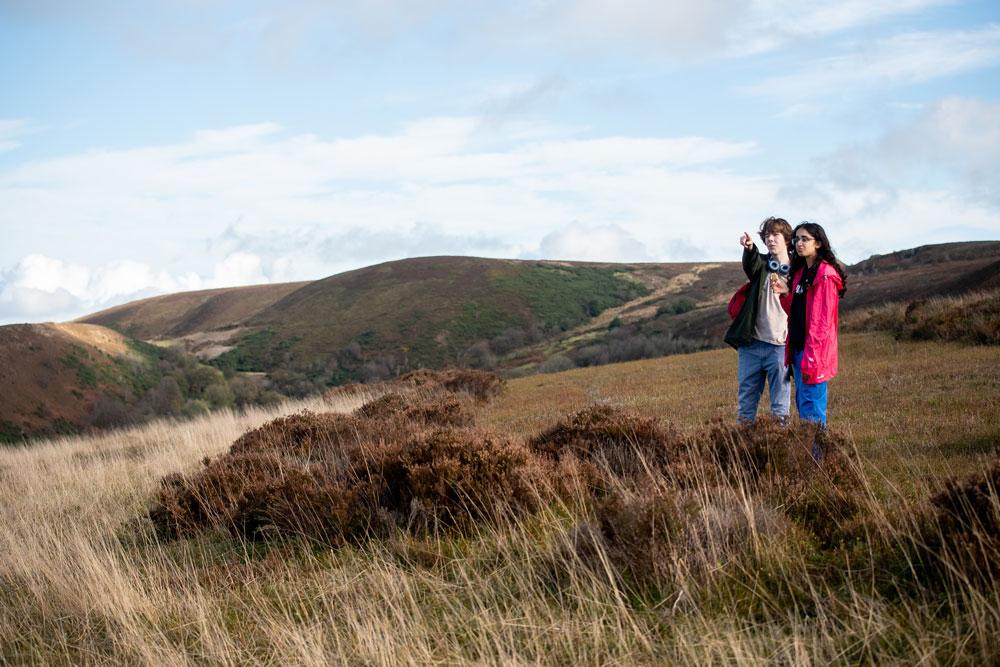
A student visiting one of our three sites in Wales commented after a day in the mountains: “I thought the monster was the fog. But it was actually the feeling of not knowing what to do next. Once we talked about that, the fog didn’t matter anymore.”
Uncertainty itself isn’t overwhelming but facing it without language or support is. Our adventure learning approach and underlying ‘Teaching with Monsters’ philosophy give students the tools to articulate unfamiliarity, break down complex tasks and move forward with confidence. When adults treat uncertainty as normal and navigable, learners experience challenge as something they can manage and grow through rather than avoid.
Why uncertainty is a leadership issue
Schools often work hard to reduce unpredictability so that learning feels controlled and orderly. Yet both national policy documents are unambiguous: young people must develop the dispositions needed to navigate an unpredictable world – resilience, judgment, critical thinking, decision-making and agency.
Another student experiencing the Welsh hills with us reflected: “The hardest part wasn’t the fog, it was admitting what I didn’t know. Once we said it out loud, we could actually start thinking.”
Senior leaders should resist the urge to eradicate uncertainty for students – it is, after all, a capability they need to help them cultivate. Schools that help pupils understand, articulate and navigate uncertainty prepare them not only for exams and post-16 pathways but for adulthood, employment and civic life. There is no better environment in which to experience unpredictability than the great outdoors. Teachers tell us that what students develop during their time with us doesn’t stay in the hills – teachers see the same language and behaviours back in the classroom.
A lever for curriculum coherence
The recent Curriculum Review outlines an ambitious programme – a revised national curriculum, digital curriculum maps, strengthened disciplinary thinking, revitalised arts and music, stronger fieldwork and climate education and improved transition into KS3. For many schools, delivering these changes simultaneously may feel daunting. But a Teaching with Monsters approach offers a single, unifying way of thinking about teaching and learning that can help tie all of these strands together.
When learners name what feels unfamiliar, identify next steps, work in structured roles and reflect consistently, they are already practising the thinking skills that underpin every subject. Geography fieldwork becomes a place to practise evidence-led decision-making. English uses the same reflection structures to deepen oracy and written explanation. This creates a shared language of learning across subjects, supporting curriculum intent, implementation and impact.
‘Teaching with Monsters’ is, at its heart, a transferable philosophy – one that begins outdoors but is designed to live on in the everyday habits, language and thinking of every learner who experiences it.
Enrichment as a strategic entitlement
By 2028 all schools will be expected to deliver a core enrichment entitlement across civic engagement, arts, nature/outdoor education, sport and wider life skills. For senior teams, the challenge is ensuring enrichment is meaningful, equitable, safe and curriculum-connected.
The Field Studies Council adventure learning framework helps deliver this coherently. Its structures reduce behavioural risk, support staff confidence and ensure young people learn not just through activities but from them. Clear briefings, threshold moments and structured debriefs make the experience predictable and teachable.
Inclusion and the participation gap
The Youth Strategy and Curriculum Review both raise concerns about participation gaps, particularly for disadvantaged pupils, SEND learners and young people at risk of disengagement. The ‘Teaching with Monsters’ theory that we deploy outdoors is designed to work for every learner. It doesn’t assume prior experience or cultural capital – instead it builds on behaviours anyone can learn: naming what feels unfamiliar, breaking tasks into steps, listening carefully, making considered decisions and reflecting honestly.
As one student told us: “I used to think I was bad at new things. But I realised I just didn’t have a way of starting.”
Another reflected: “I didn’t learn how to avoid uncertainty. I learned how to move through it.”
That is exactly what ‘Teaching with Monsters’ gives every young person – and it is what the Field Studies Council’s new adventure learning programme of residentials is built to deliver.